Understanding Electrical Compliance Certificates
Essential guide to electrical compliance certificates and safety documentation. Learn what certificates electricians provide, when they're required, why they matter, and how certificates protect property owners legally and financially.
Importance of Electrical Certificates
Electrical compliance certificates document that electrical work meets Australian Standards and regulatory requirements. Licensed electricians issue certificates confirming work complies with safety standards protecting property owners legally while satisfying insurance and regulatory requirements. Understanding electrical certificates helps Central Coast property owners ensure proper documentation for all residential and commercial electrical work.
This guide explains certificate types including Certificates of Compliance for completed work, electrical safety inspection reports, defect notices requiring remedial work, and specialized certificates for specific installations. We cover when certificates are required, what they contain, why they matter for insurance and property sales, and how to obtain missing certificates ensuring complete electrical documentation.
- Certificates of Compliance
- Electrical safety inspection reports
- Defect notices and remediation
- Insurance requirements
- Property sale requirements
- Regulatory compliance
- Certificate retention
- Obtaining missing certificates
Types of Electrical Certificates
Certificate of Compliance
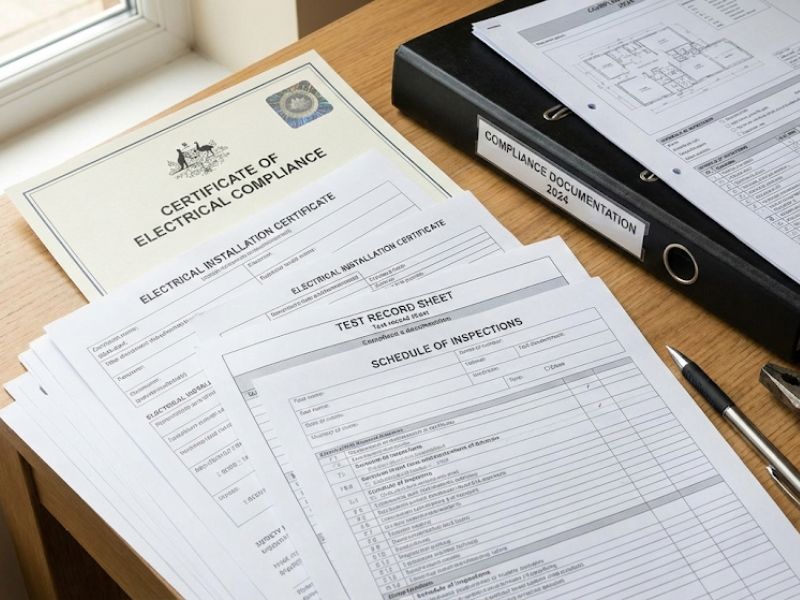
Certificates of Compliance (CoC) confirm completed electrical work meets Australian Standards and relevant regulations. Licensed electricians issue CoCs after completing electrical installations, modifications, or repairs certifying work complies with AS/NZS 3000 Wiring Rules. CoCs include electrician details and licensing, work description and location, compliance statement, testing results if applicable, and dates of work completion. Property owners must receive and retain CoCs providing legal proof of compliant electrical work.
Electrical Safety Inspection Certificates
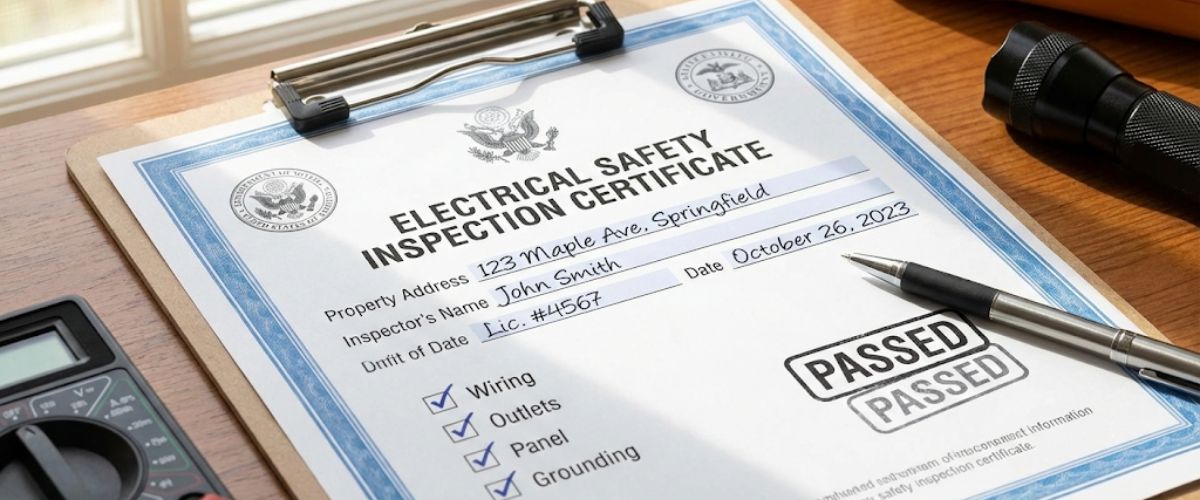
Safety inspection certificates document comprehensive electrical system assessments. Inspections examine switchboards, wiring, fixtures, earthing, safety devices, and overall electrical condition providing detailed condition reports. Inspection certificates identify defects requiring attention, confirm compliant installations, assess electrical safety, and provide recommendations for improvements. Regular inspections with certification maintain electrical safety while satisfying insurance and regulatory requirements.
Defect Notices
Electricians issue defect notices when discovering non-compliant or hazardous electrical conditions during inspections or other work. Defect notices describe specific problems, explain why conditions are non-compliant or dangerous, recommend remedial actions, and set timeframes for corrections. Defect notices create legal obligations requiring problem rectification. Serious defects may require immediate action preventing continued electrical system use until repairs complete ensuring safety.
Specialized Installation Certificates
Specific electrical installations require specialized certification. Smoke alarm compliance certificates confirm installations meet regulatory requirements critical for property sales and rentals. Pool electrical certificates verify compliant electrical for swimming pools and spas. Level 2 service connection certificates document electrical network connections. Each specialized certificate confirms specific compliance requirements for particular installation types.
When Electrical Certificates Are Required
New Electrical Installations
All new electrical installations require Certificates of Compliance documenting work meets standards. New installations include additional power points and circuits, lighting installations, switchboard upgrades or replacements, ceiling fan installations, air conditioning electrical, and any electrical additions or modifications. Electricians issue certificates upon work completion providing compliance documentation property owners retain permanently.
Electrical System Upgrades
Major electrical upgrades require comprehensive certification. Complete rewiring projects, electrical service upgrades, three-phase installations, and substantial electrical modifications all necessitate certificates confirming upgraded systems comply with current standards. Upgrade certificates provide critical documentation proving electrical modernization and compliance valuable for property sales and insurance.
Property Sales and Transfers
Property sales often require electrical documentation. While electrical safety certificates aren't universally mandatory for sales, buyers increasingly request them. Some states and local councils mandate smoke alarm compliance certificates for property transfers. Comprehensive electrical documentation including installation certificates and recent inspection reports facilitates smoother property sales demonstrating electrical system condition and compliance. Properties lacking certificates may face buyer scrutiny or reduced valuations.
Rental Property Requirements
Rental properties have specific electrical certification requirements. Landlords must ensure electrical safety through periodic inspections, smoke alarm compliance with appropriate certification, prompt defect rectification when identified, and maintenance documentation. Rental electrical compliance protects tenants while satisfying landlord legal obligations. Failure to maintain compliant electrical creates liability risks and potential regulatory penalties.
What Electrical Certificates Contain
Electrician and License Information
Certificates identify electricians who completed work and their licensing details. This includes electrician name and business details, electrical contractor license number, licensed individual electrician details, contact information, and professional affiliations if applicable. License information enables verification ensuring work was completed by properly qualified licensed electricians. Certificates without proper licensing details may indicate unlicensed work creating serious legal and insurance issues.
Work Description and Location
Certificates describe work completed and location specifics. Work descriptions include type of electrical work performed, circuits affected or installed, materials and equipment used, specific locations within property, and scope of installations or modifications. Detailed work descriptions enable future electricians to understand electrical system modifications while providing property owners clear documentation of what work certificates cover.
Compliance Statements
Certificates contain formal compliance declarations. Electricians certify work complies with AS/NZS 3000 Wiring Rules, relevant Australian Standards, state and local regulations, and appropriate codes of practice. Compliance statements create legal accountability for electricians while assuring property owners work meets required standards. False certification can result in licensing sanctions and legal liability for electricians.
Testing and Verification Results
Many certificates include electrical testing results. Testing documentation covers insulation resistance measurements, earth loop impedance testing, RCD operation verification, circuit protection coordination, and polarity and continuity verification. Testing results provide technical evidence of electrical safety and compliance. Comprehensive testing documentation demonstrates thorough professional electrical work.
Why Electrical Certificates Matter
Insurance Coverage Protection
Insurance policies require compliant electrical work for coverage validity. Electrical incidents involving non-compliant electrical or lacking proper certification can void insurance claims. Certificates provide proof of compliant electrical work supporting insurance claims if electrical incidents occur. Property owners without appropriate certificates risk insurance denial following electrical fires or incidents creating potentially devastating financial exposure. Maintaining complete electrical certificate documentation protects insurance coverage.
Legal Liability Protection
Electrical certificates protect property owners from legal liability. Certificates prove electrical work was completed by licensed professionals meeting required standards, demonstrate due diligence maintaining electrical safety, provide defense against negligence claims if electrical incidents occur, and satisfy regulatory compliance requirements. Without certificates, property owners may face liability for electrical incidents even when not directly responsible for electrical work.
Property Value and Marketability
Complete electrical documentation enhances property value and marketability. Properties with comprehensive electrical certificates and recent inspection reports demonstrate well-maintained electrical systems, provide buyers confidence in electrical condition, facilitate smoother sales processes, and may command premium prices compared to properties lacking documentation. Conversely, missing certificates raise buyer concerns potentially reducing property values or complicating sales.
Warranty and Guarantee Support
Certificates support warranty claims for electrical work and equipment. Installation certificates prove proper installation supporting equipment warranties, provide evidence for warranty claims if equipment fails, and document work completion dates relevant for warranty periods. Without certificates, establishing warranty eligibility becomes difficult potentially voiding valuable warranty coverage.
Certificate Retention and Management
How Long to Keep Certificates
Property owners should retain electrical certificates permanently. Certificates provide permanent electrical work records, support future electrical modifications requiring historical documentation, maintain value for property sales requiring electrical documentation, and preserve warranty and insurance evidence. Store certificates safely with other important property documents. Digital copies provide backup protecting against loss while maintaining accessibility.
Organizing Electrical Documentation
Systematic certificate organization facilitates easy access when needed. Create dedicated electrical documentation files organizing certificates chronologically, maintain digital backups of all certificates, record certificate details in property maintenance logs, and update documentation with each electrical project. Well-organized documentation simplifies finding specific certificates when required for sales, insurance, or future electrical work.
Providing Certificates to New Owners
Property sales should include electrical certificate transfer to new owners. Compile all electrical certificates and inspection reports, provide copies to buyers during settlement, explain certificate significance and retention importance, and recommend ongoing electrical documentation practices. Comprehensive certificate provision demonstrates property care while helping new owners maintain electrical documentation.
Missing or Lost Certificates
Obtaining Copies of Existing Certificates
Lost certificates may be recoverable from original electricians. Contact electricians who completed work requesting certificate copies. Licensed electricians maintain work records typically providing duplicate certificates. If original electricians are unavailable or businesses closed, retrieving certificates becomes more difficult. Some electrical licensing authorities maintain certificate registers enabling certificate verification though not always providing copies.
When Certificates Cannot Be Located
Sometimes certificates for past work cannot be obtained. Options include engaging electricians for new electrical inspections issuing current certificates, accepting that old work lacks documentation while ensuring future work is properly certified, conducting comprehensive electrical assessments documenting current electrical condition, and for property sales, disclosing certificate absence to buyers. While not ideal, transparent disclosure and current inspections mitigate missing historical certificates.
Retrospective Certification
Electricians cannot issue retrospective compliance certificates for work they didn't complete. However, electricians can inspect electrical systems issuing current safety inspection certificates. Inspection certificates document current electrical condition, identify any non-compliant work requiring rectification, confirm systems operate safely, and provide buyers reassurance despite lacking historical certificates. Professional inspections with certification effectively address missing documentation concerns.
Smoke Alarm Compliance Certificates
Smoke Alarm Certification Requirements
Many states require smoke alarm compliance certificates for property sales and rentals. Requirements typically mandate photoelectric smoke alarms, hardwired installations with battery backup, alarm interconnection throughout properties, appropriate placement in bedrooms and hallways, and professional installation with certification. Compliance certificates confirm installations meet regulatory requirements. Non-compliant smoke alarms may delay property settlements or create rental compliance issues.
Obtaining Smoke Alarm Certificates
Licensed electricians inspect smoke alarm installations issuing compliance certificates when installations meet requirements. Inspections verify alarm types meet specifications, confirm proper installation and interconnection, test alarm operation, and ensure placement complies with regulations. Electricians identifying non-compliant installations provide rectification quotes bringing properties to compliance enabling certificate issue. Professional smoke alarm installation with certification ensures regulatory compliance avoiding settlement or rental complications.
Electrical Safety Inspection Reports
What Safety Inspections Cover
Comprehensive safety inspections examine entire electrical systems. Inspections assess switchboard condition and protection devices, wiring condition and deterioration, fixture safety and operation, earthing system integrity, safety device operation including RCD testing, compliance with current standards, and identification of safety hazards. Detailed inspection reports document findings providing comprehensive electrical condition snapshots.
Inspection Frequency Recommendations
Regular electrical inspections maintain safety and compliance. Recommended inspection frequency includes owner-occupied properties every 10 years, rental properties every 5 years or between tenancies, commercial properties every 5 years, properties over 40 years old every 5 years, and properties with known electrical issues more frequently. Regular inspections identify deteriorating electrical before failures occur while maintaining current documentation valuable for insurance and property sales.
Acting on Inspection Findings
Inspection reports classify findings by urgency. Safety hazards require immediate attention, non-compliant installations need timely rectification, maintenance recommendations improve reliability and efficiency, and upgrade suggestions enhance electrical capability. Prioritize safety-critical repairs followed by compliance work. Inspection reports provide roadmaps for electrical maintenance and improvements ensuring safe compliant electrical systems.
Defect Notices and Remediation
Understanding Defect Notices
Defect notices document serious electrical deficiencies requiring correction. Electricians issue notices when discovering immediately dangerous electrical, non-compliant installations creating hazards, deteriorated electrical requiring urgent attention, and installations violating safety standards. Defect notices create legal obligations requiring defect rectification. Ignoring defect notices creates liability while perpetuating dangerous electrical conditions.
Responding to Defect Notices
Property owners receiving defect notices must act promptly. For immediate dangers, arrange urgent electrician response. For serious defects, obtain quotes for rectification work and schedule repairs promptly. For minor defects, plan repairs within recommended timeframes. Document all defect rectification obtaining compliance certificates upon completion. Prompt defect response maintains electrical safety while demonstrating responsible property ownership.
Certificate Verification
Verifying Certificate Authenticity
Verify electrical certificates are genuine and accurate. Check electrician licensing through official channels, confirm businesses and electricians exist, verify contact details are current, and ensure certificates contain required information. Be wary of certificates lacking detailed electrician information, missing license numbers, or appearing unprofessional. Fraudulent certificates provide no legal protection while indicating potentially illegal electrical work.
What to Do About Suspicious Certificates
Certificates raising concerns warrant investigation. Attempt to contact listed electricians verifying they completed work, check licensing authority records confirming license validity, consider engaging independent electricians for inspections, and report suspected fraudulent certificates to authorities. Discovering fraudulent certificates necessitates electrical inspections by legitimate licensed electricians assessing work quality and safety.
Summary: Electrical Certificate Importance
Electrical compliance certificates provide essential documentation proving electrical work meets safety standards and regulations. Certificates protect property owners through insurance coverage maintenance, legal liability protection, and property value preservation. All electrical work should receive appropriate certification with certificates retained permanently.
Engage only licensed electricians who provide proper certification for electrical work. Maintain organized electrical documentation including certificates and inspection reports. Regular safety inspections with certification maintain electrical condition documentation while identifying problems early. Complete electrical certificate documentation demonstrates responsible property ownership protecting families and investments through proper electrical safety compliance.
Need Electrical Certificates or Inspections?
Professional electricians providing certified electrical work and safety inspections throughout Central Coast. All work properly documented with compliance certificates. Contact us today.
Licensed & Insured • Full Certification • Professional Documentation