Emergency Lighting Central Coast
Professional emergency lighting installation Central Coast for commercial buildings and workplaces. Part of our commercial electrical services across the Central Coast, we specialise in compliant emergency and exit lighting systems. From installation to testing and maintenance, our licensed electricians ensure safe emergency evacuation lighting meeting Australian Standards throughout Central Coast commercial properties.
Compliant Emergency Lighting Systems
Emergency lighting provides illumination during power failures enabling safe building evacuation. Building Code of Australia and Australian Standards mandate emergency lighting in commercial buildings, public areas, and multi-tenant properties. Professional installation ensures correct lighting placement, adequate illumination levels, and reliable operation during emergencies.
As licensed electricians, we install complete emergency lighting systems including exit signs showing evacuation routes, emergency light fittings providing escape path illumination, central battery systems for large buildings, self-contained emergency lights for smaller premises, and regular testing and compliance documentation. We ensure all emergency lighting meets AS/NZS 2293 requirements.
- Emergency lighting installations
- Exit sign installations
- Central battery systems
- Self-contained emergency lights
- Emergency lighting testing
- Compliance certification
- Emergency lighting maintenance
- LED emergency lighting upgrades
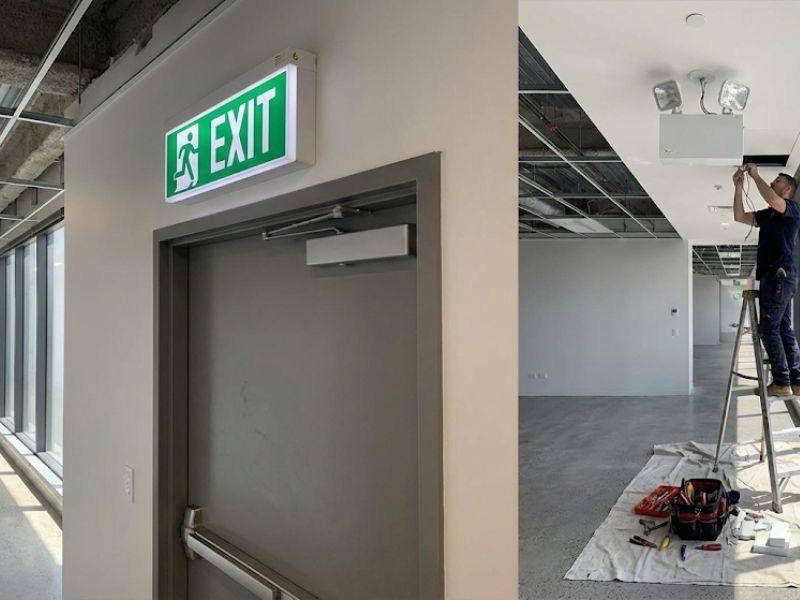
Emergency Lighting Requirements
Exit Path Illumination
Lighting escape routes from any point to final exits
Exit Signs
Clearly visible signs indicating emergency exits
90-Minute Duration
Minimum operating time during power failure
Regular Testing
Six-monthly testing verifying operation
Code Compliance
Meeting Building Code and Australian Standards
Documentation
Compliance certificates and test records
Emergency Lighting Types
Exit Signs
Illuminated signs showing direction to exits with battery backup for power failures.
Emergency Light Fittings
Self-contained lights with integrated batteries providing escape path illumination.
Central Battery Systems
Centralised power supply feeding multiple emergency lights throughout buildings.
LED Emergency Lights
Energy-efficient LED technology providing reliable emergency illumination.
Learn moreSpitfire Emergency Lights
High-output emergency lights for large open areas requiring extensive coverage.
Spot Emergency Lights
Adjustable emergency lights directing illumination to specific areas.
Self-Contained Emergency Lights
Self-contained units include integral battery, charging circuit, and lamp in single fitting. These suit smaller buildings and simpler installations including offices and retail premises, small warehouses, apartment buildings, and strata properties. Self-contained lights charge from mains power and activate automatically during power failures. Modern LED emergency lights provide superior illumination using minimal battery capacity. We install quality self-contained emergency lights throughout commercial properties. For complete commercial services, see our commercial electrician page.
Central Battery Systems
Central battery systems use centralised power source feeding multiple emergency lights. Benefits include easier battery maintenance, longer battery life, lower ongoing costs, and better reliability. Central systems suit larger buildings including shopping centres, hospitals and aged care facilities, schools and universities, and large office buildings. We design central battery systems providing adequate emergency lighting throughout buildings. Central systems require professional design ensuring correct cable sizing and distribution. For electrical installation projects, see our electrical installation services.
LED Emergency Lighting
LED emergency lights offer advantages over older fluorescent types including lower power consumption extending battery life, instant-on full brightness, longer LED lifespan, and better light quality. We upgrade old emergency lighting to efficient LED systems. LED emergency lights operate 3-4 times longer on same battery capacity. Modern LED exit signs and emergency lights provide reliable operation with minimal maintenance. LED technology makes emergency lighting more reliable and cost-effective.
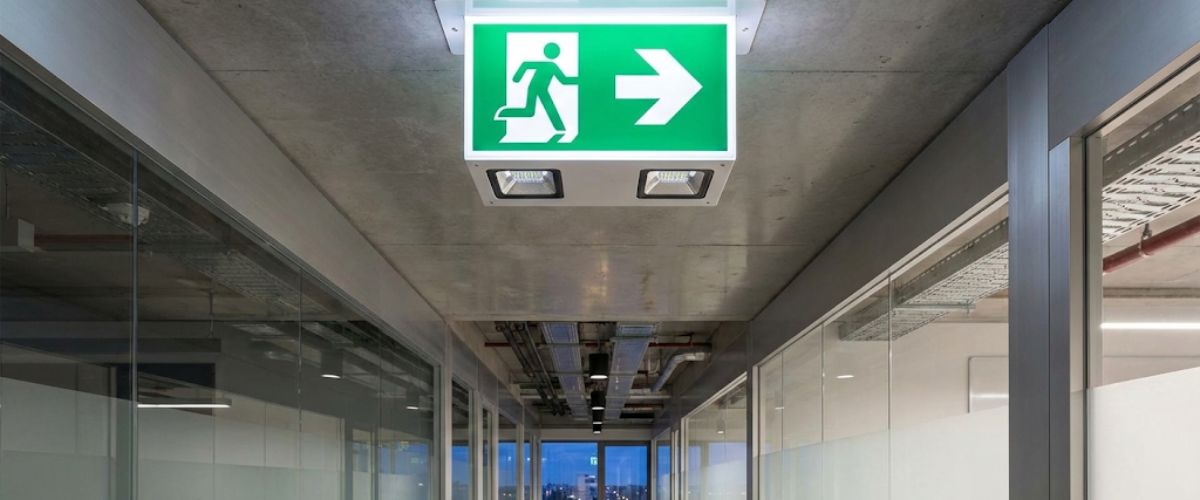
Emergency Lighting Standards
AS/NZS 2293 Requirements
Australian Standard AS/NZS 2293 specifies emergency lighting requirements including minimum illumination levels on escape paths, 90-minute minimum operating duration, emergency lighting positioning requirements, exit sign visibility distances, and testing and maintenance schedules. We design emergency lighting systems meeting all standard requirements. Compliance ensures occupant safety during emergencies. Non-compliant emergency lighting fails inspections and creates liability. For electrical compliance work, coordinate with safety inspections.
Building Code Requirements
Building Code of Australia mandates emergency lighting in specific building types including Class 2-9 buildings (all except houses), buildings with complex egress, underground or windowless areas, and high-rise buildings. Emergency lighting requirements vary by building classification and occupancy. We assess buildings determining emergency lighting obligations. Building certifiers verify emergency lighting compliance during construction and fitout approvals.
Illumination Levels
AS/NZS 2293 specifies minimum illumination on escape paths including 1 lux minimum along paths, 20 lux in high-risk areas, uniform illumination preventing dark spots, and adequate illumination at obstacles and hazards. We design emergency lighting achieving required illumination levels throughout evacuation paths. Photometric calculations verify adequate lighting coverage. Proper illumination enables safe evacuation during emergencies.
Emergency Lighting Installation
Design and Planning
Effective emergency lighting requires proper planning including assessing building layout and exits, identifying required escape paths, calculating illumination requirements, determining optimal light positions, and selecting appropriate lighting types. We design emergency lighting systems providing code-compliant coverage. Plans show emergency light positions, exit sign locations, and wiring routes. Building certifiers review emergency lighting designs before installation. For broader electrical work including switchboards, we coordinate complete installations.
Installation Process
Emergency lighting installation involves mounting emergency lights and exit signs at designed positions, running cables supplying emergency lighting, connecting lights to central battery or mains power, installing battery backup systems, programming test switches and monitoring, and commissioning and testing complete system. We install emergency lighting minimising disruption to operating businesses. All installations comply with wiring standards and building codes.
Testing and Commissioning
After installation, comprehensive testing verifies operation including simulating mains failure activating emergency lights, measuring illumination levels at critical points, timing battery duration under load, checking exit sign visibility, and documenting test results. We provide commissioning reports demonstrating compliance. Initial testing establishes baseline performance for ongoing maintenance.
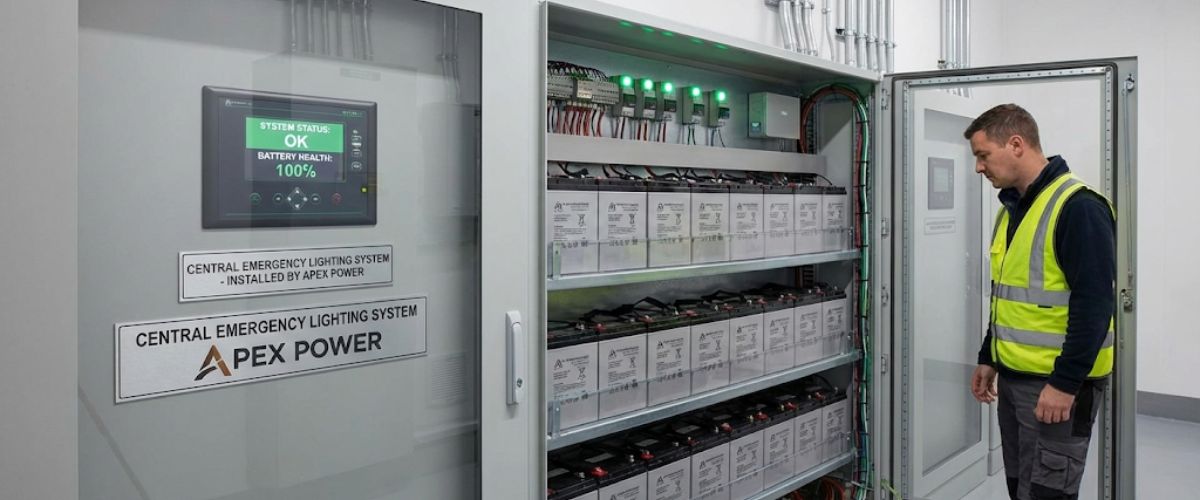
Emergency Lighting Testing
Six-Monthly Testing
AS/NZS 2293 requires emergency lighting testing every six months including simulating power failure, verifying all lights activate, checking illumination adequacy, timing 90-minute duration test, and documenting results. We provide six-monthly testing services for commercial properties. Regular testing identifies failing batteries and faulty lights before real emergencies. Test records demonstrate due diligence and compliance. For other testing services, see our electrical repairs and testing.
Annual Discharge Testing
Annual testing involves full 90-minute discharge testing verifying batteries maintain adequate voltage throughout duration, lights provide sufficient illumination for full period, and systems meet performance standards. Annual tests are more comprehensive than six-monthly tests. We conduct annual discharge testing with detailed reporting. Annual testing identifies deteriorating batteries requiring replacement.
Logbook Requirements
Emergency lighting logbooks record all testing and maintenance including test dates and results, battery replacements, light repairs and replacements, and system modifications. We maintain logbooks for client properties. Logbooks demonstrate compliance history during building inspections and audits. Digital logbooks provide easy access to compliance records.
Emergency Lighting Maintenance
Battery Replacement
Emergency lighting batteries require periodic replacement including self-contained light batteries (3-5 years), central battery systems (5-10 years depending on type), and exit sign batteries (3-5 years). We replace batteries before failures ensuring continued emergency protection. Battery replacement is most common emergency lighting maintenance. Deteriorating batteries reduce emergency duration creating compliance failures. Regular replacement prevents emergency lighting failures.
Lamp and LED Replacement
Emergency lights require lamp or LED module replacement when they fail. LED emergency lights last much longer than fluorescent reducing maintenance. We replace failed lamps and LEDs maintaining emergency lighting operation. Testing identifies non-functioning lights requiring attention. Prompt repairs maintain emergency protection levels. For related lighting work, coordinate with general lighting installations.
System Upgrades
Older emergency lighting systems benefit from upgrades including LED conversion reducing power consumption, modern battery technology extending duration, intelligent monitoring systems, and additional coverage for building modifications. We upgrade emergency lighting improving reliability and reducing maintenance. LED upgrades dramatically reduce ongoing costs while improving performance.
Emergency Lighting Applications
Office Buildings
Exit paths, stairwells, corridors, and open office areas
Retail Premises
Customer areas, back of house, and evacuation routes
Warehouses
High-bay emergency lights covering large open areas
Hospitality
Restaurants, cafes, hotels providing customer safety
Educational
Schools, universities protecting students and staff
Healthcare
Medical facilities requiring enhanced emergency lighting
Emergency Lighting Compliance
Emergency lighting compliance is essential for building occupation including passing building certifier inspections, meeting insurance requirements, workplace safety obligations, and protecting building occupants. Non-compliant emergency lighting creates significant liability. We ensure emergency lighting meets all compliance requirements. Regular testing maintains ongoing compliance. For complete compliance services including smoke alarms, we provide comprehensive safety systems.
Compliance Certification
Documentation proving emergency lighting meets standards
Test Records
Detailed records of all testing and maintenance
Safety Assurance
Verified emergency lighting providing occupant protection
For emergency lighting pricing, visit our pricing page or call for assessment. For urgent commercial electrical work, contact our emergency electrician. For residential electrical needs, see our residential services.
Need Emergency Lighting Installation?
Licensed Central Coast electricians ready to install compliant emergency lighting systems. Professional design, installation, testing and certification. Call now for emergency lighting services.
Contact us | Back to homepage | Licensed & Insured • Code Compliant • Life Safety Systems